
Notting Hill's Trusted Dental Clinic
Save Your Tooth with Root Canal Treatment
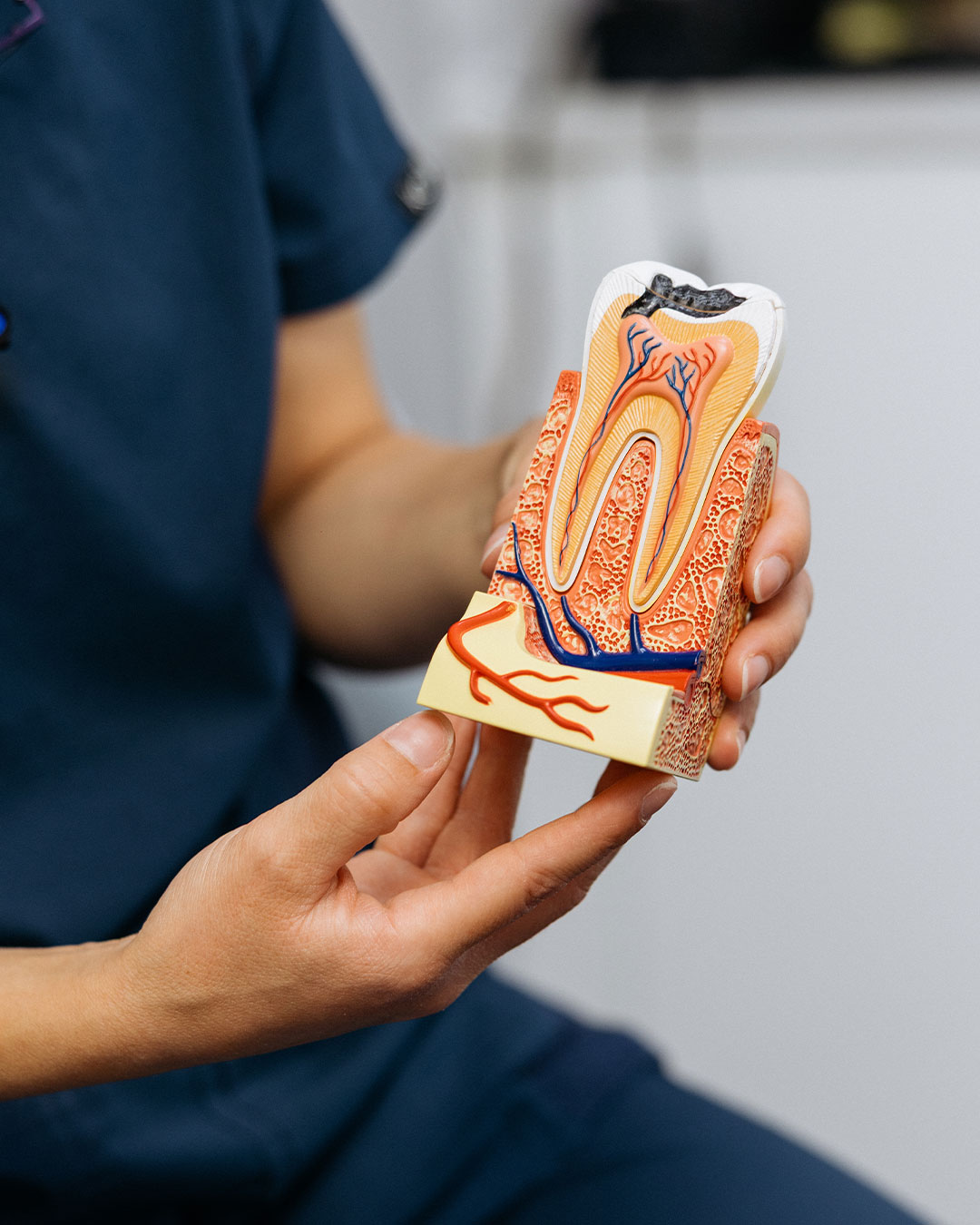
At Notting Hill Dental Clinic, our experienced team uses modern techniques and local anaesthetic to save your natural tooth, eliminate the infection and restore full function.
Free X-Ray Included
Pain-Free Under Local Anaesthetic
Same-Week Appointments
IS THIS YOU?
Signs You Need a Root Canal Treatment
Pain
Severe toothache that won't go away
Abscess
Painful swelling or visible lump near the affected tooth
Infection
There is an infection inside the tooth
Save your tooth
You want to avoid extraction
PRICING
Root Canal Treatment
Simple Root Canal Treatment
A standard root canal treatment performed by our general dentist.
£650
0% finance over 24 months
Most Popular
Complex Root Canal Treatment
A specialist root canal treatment performed by our endodontist.
£900
0% finance over 24 months
WHY CHOOSE ROOT CANAL TREATMENTS?
Root Canal Treatment at a Glance
Discover how root canal treatment saves infected teeth, relieves pain, and restores your natural smile to full health and function.
Relieves Pain & Restores Function
Root canal treatment effectively eliminates the source of severe tooth pain and restores your tooth to full function, allowing you to eat and speak with confidence.
Safe, Effective & Comfortable
Root canal treatment is a clinically proven procedure with a high rate of success. Advances in dental technology make it far more comfortable than many patients anticipate.
Saves Your Tooth & Stops the Infection
This treatment preserves your natural tooth rather than resorting to extraction, while preventing the spread of bacteria to surrounding teeth and tissue.

GET STARTED
Book Your Root Canal
At Notting Hill Dental Clinic
Are you experiencing severe tooth pain, sensitivity or swelling around the gum? Do not wait.
Left untreated, an infected tooth will only get worse. The pain intensifies, the swelling spreads and what could have been saved with a root canal may end up needing to be extracted.
At Notting Hill Dental Clinic, we offer same-week appointments for patients in pain. The procedure is carried out under local anaesthetic in a calm, reassuring environment by our experienced endodontic specialist. For patients who feel particularly anxious, sedation is also available. The sooner you come in, the more we can do to save your tooth.
- 0% Finance Available Over 12-60 Months
UNDERSTANDING ROOT CANAL TREATMENT
What is Root Canal Treatment
Root canal treatment becomes necessary when the pulp inside a tooth, the soft tissue containing nerves and blood vessels, becomes infected or inflamed. This can happen as a result of deep decay, a cracked tooth, or trauma. When bacteria reach the pulp, the infection spreads quickly, causing severe pain, sensitivity to heat and cold, swelling around the gum and sometimes a visible abscess.
Left untreated, the infection will continue to spread and the tooth will eventually need to be extracted. Root canal treatment is the only way to save it.
The root canal procedure involves removing the infected pulp, carefully cleaning and shaping the root canals, and sealing them to prevent any further infection. The tooth is then restored with a crown or filling to protect it and restore full function.
- Full dental examination and X-rays
- Local anaesthetic for a completely pain-free procedure
- Sedation available for nervous patients
- Removal of infected pulp and thorough cleaning of root canals
- Sealing and restoration of the tooth
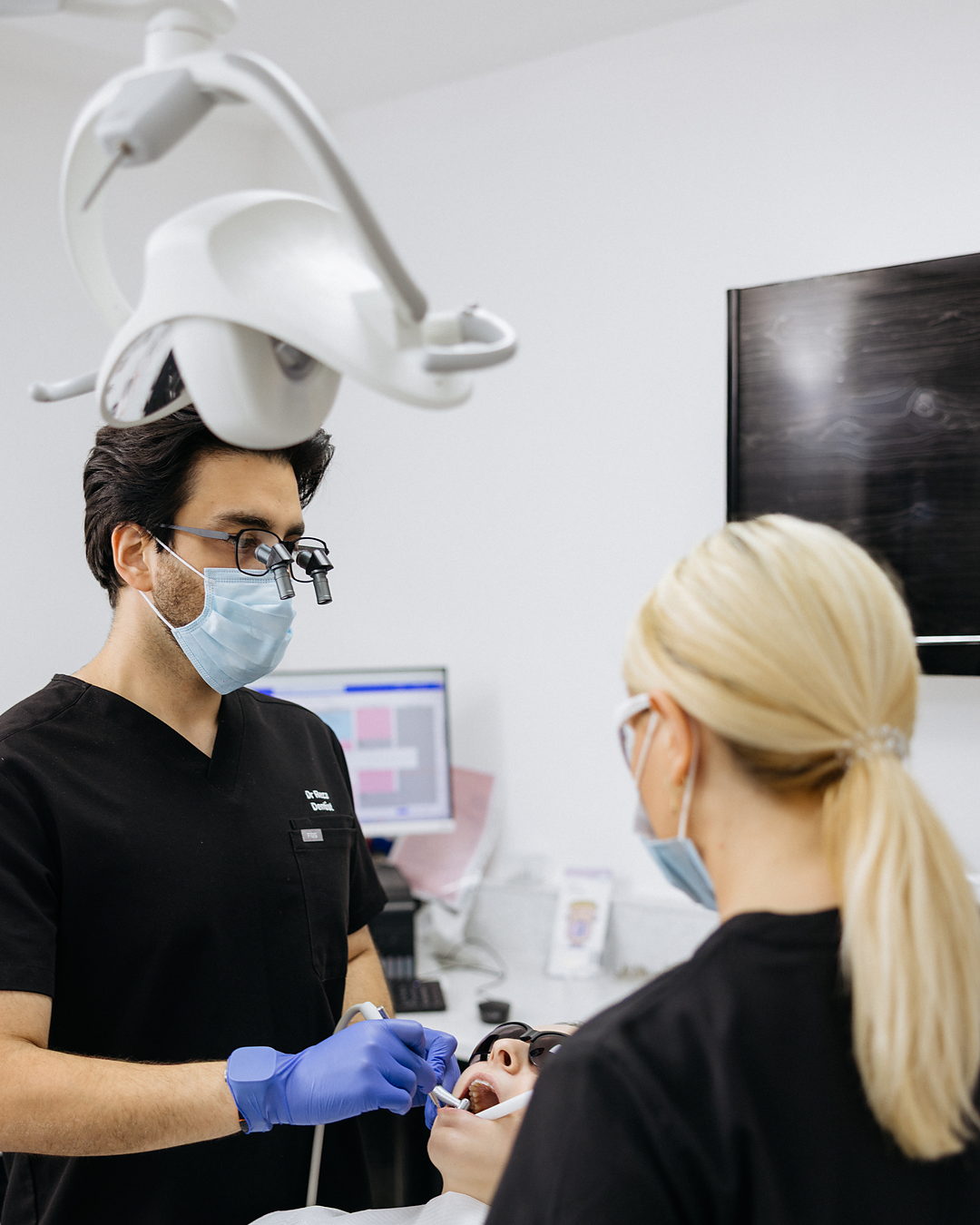
Your Journey
Root Canal Procedure
Step-by-step
Meet Your Dentist

Dr Reza Eslami
Clinical Lead
Restorative and Cosmetic Dentist
GDC No: 295847
Reza stands as one of our most distinguished dentists, boasting extensive experience in oral surgery and sedation care.
Qualifications
BDS (Hons)
MEng (Hons)
UCLAN (UK)

Dr Radhika Patel
Endodontist
GDC No: 251514
Dr. Radhika Patel is an endodontic specialist, caring for nervous patients with precision and compassion.
Qualifications
BDS KCL
Got Questions?
Frequently Asked Questions
Find answers to the most common questions about Root Canal.
Why Would I need a ‘re-root’ canal treatment?
Root canal treatment is not a treatment with a 100% success. Like all treatment’s things can fail. This could be for several reasons including:
- Not all the roots were located
- The root canals were not well cleaned to their full length
- Decay leaking into the root canal system due to a defective filling or crown
- Fracture within the tooth
- Complicated anatomy
- Periodontal disease
- Complications in your previous root canal treatment
This treatment can be more complex due to the previous attempt at root canal therapy.
Is root canal treatment painful?
This is a question that is always on every patient’s mind. The simple answer is No, root canal treatment is painless. Be re-assured that treatment will not proceed until you are comfortable. Once the local anaesthetic has kicked in the root treatment should be a pleasant and comfortable experience.
Our team will address any of your concerns during the initial consultation.
How long will the treatment take?
Root canal treatment may need to be carried out over one or two visits. Between appointment an antibacterial medicament is placed inside your root canal and an intermediate restoration.
Cases more likely to require two or more visits include:
- Re-treatments
- Large area of infection visible on radiograph or discharge from the tooth
- Root canals were not fully cleaned to their full length
- Cases where canals are hard to locate or have severe curves
- Trauma
What are the complications and risks of treatment/retreatments?
- Searching for very small canals may cause a perforation (hole) in the tooth, which can sometimes be repaired.
- Narrow canals may cause instruments to separate; we will try to remove or bypass them, otherwise the tooth will be reviewed.
- Root canal treatment can weaken the tooth, so a crown or filling is needed to prevent fracture.
- Incomplete healing may require monitoring, and in some cases the lesion may not heal.
- Some teeth may not be savable and may require extraction.
- In rare cases, swelling, bruising, or pain may occur due to disinfecting chemicals.
- After treatment, mild discomfort may last 5–7 days and can be managed with painkillers; rarely, a flare-up may require further treatment.